

Freediving on Screen: 5 Must-Watch Films to Discover

L’apnée est un sport fascinant qui allie maîtrise de soi, connexion avec la nature et exploration des profondeurs marines. Bien que souvent perçue à travers des performances extrêmes, elle touche aussi à des enjeux plus personnels et intimes. Je vous invite à plonger avec moi dans l’univers du cinéma pour découvrir cinq réalisations dont le sujet principal est l’apnée. À travers des documentaires poignants ou des récits plus fictifs, ces œuvres nous montrent des personnages qui se confrontent à leurs limites physiques et mentales dans des environnements sous-marins. Découvrez mon top 5 des films qui explorent cette discipline intense.
Freediving is a fascinating sport that combines self-control, a connection with nature, and exploration of the ocean’s depths. While often seen through the lens of extreme performances, it also touches on more personal and intimate aspects. In this article, I invite you to dive into the world of cinema with me to explore five films centered around freediving. Through poignant documentaries or more fictional narratives, these works showcase characters who confront their physical and mental limits in underwater environments. Here’s my top 5 list of films that dive deep into this intense discipline.
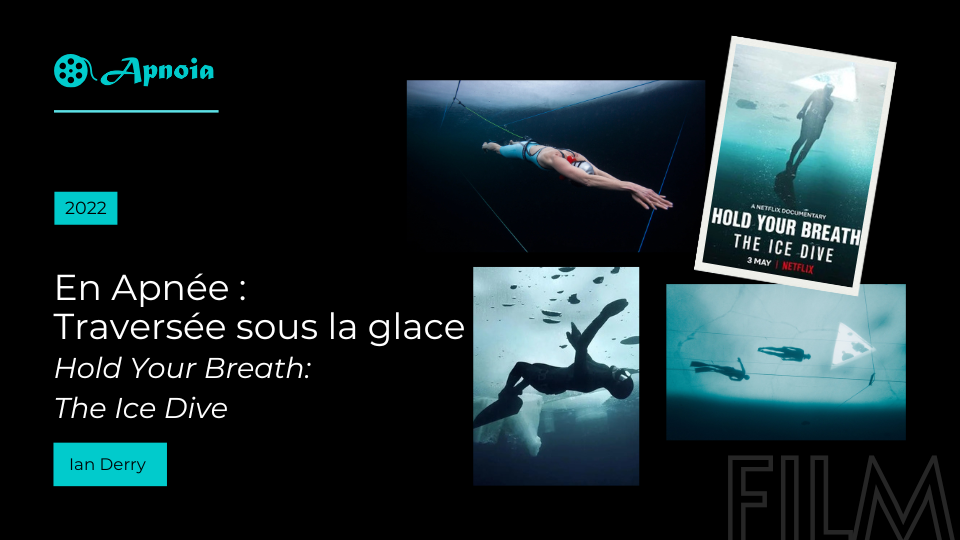
En Apnée: Traversée sous la Glace, film de Ian Derry
En résumé : ce film suit Johanna Nordblad, une apnéiste, qui tente de traverser un lac gelé en apnée, explorant les défis physiques et mentaux de cette performance extrême et audacieuse.
En Apnée: Traversée sous la Glace est un documentaire captivant réalisé par Ian Derry, qui suit la performance extrême de Johanna Nordblad, une apnéiste de renommée mondiale, alors qu’elle tente de traverser un lac gelé en apnée. Le film explore non seulement l’importance technique et mentale de l’apnée, mais aussi les défis psychologiques et physiques auxquels Nordblad doit faire face lors de cette expérience hors du commun.
L’intrigue du film se concentre sur la préparation et la réalisation d’une performance unique : traverser sous la glace d’un lac en apnée. Cette entreprise audacieuse met en lumière les risques associés à l’apnée, notamment l’hypothermie, le manque d’oxygène et les dangers de l’environnement gelé. Nordblad, accompagnée de son équipe, se prépare intensivement pour cette aventure en comprenant les limites de son propre corps et en s’entraînant à contrôler sa respiration et son mental.
À travers les images saisissantes et une narration immersive, le film met en avant la pratique de l’apnée sous un angle inédit. L’apnée exige une maîtrise totale du corps et de l’esprit. Le documentaire illustre comment l’apnéiste équilibre son souffle, sa concentration et ses sensations corporelles pour repousser les limites humaines dans un environnement extrême.
Ce documentaire est une réflexion sur la résilience et la beauté de l’apnée, tout en montrant l’engagement nécessaire pour surmonter les obstacles physiques et mentaux. C’est une plongée fascinante dans le monde de l’apnée, dans un contexte où la glace et l’eau fusionnent pour créer un défi exceptionnel.
Hold Your Breath: The Ice Dive, film by Ian Derry
Summary: The documentary film shows Johanna Nordblad, as she attempts to cross an ice-covered lake underwater, exploring the physical and mental challenges of this extreme and daring feat.
In Apnea: Crossing Under the Ice is a captivating documentary directed by Ian Derry, following the extreme performance of Johanna Nordblad, a world-renowned freediver, as she attempts to cross an ice-covered lake underwater. The film explores not only the technical and mental aspects of freediving but also the psychological and physical challenges Nordblad faces during this extraordinary experience.
The film focuses on the preparation and execution of a unique feat: crossing under the ice of a lake. This bold undertaking highlights the risks associated with freediving, including hypothermia, lack of oxygen, and the dangers of the frozen environment. Nordblad, accompanied by her team, trains intensively for this adventure, understanding the limits of her own body and working to control her breathing and mental state.
Through stunning visuals and an immersive narrative, the film presents freediving from a unique perspective. The documentary demonstrates how the freediver balances her breath, concentration, and bodily sensations to push human limits in such an extreme environment.
The documentary is a reflection on the resilience and beauty of freediving, showing the dedication required to overcome physical and mental obstacles. It offers a fascinating dive into the world of freediving, where ice and water combine to create an exceptional challenge.

Le Grand Bleu, film de Luc Besson
En résumé : Le Grand Bleu est un hommage poétique à l’apnée, suivant deux rivaux, Jacques et Enzo, qui repoussent les limites humaines, entre amour, rivalité et lien mystique avec l’océan.
Le film est un hommage à l’apnée, à la fois comme discipline sportive et expérience transcendante. Ce drame onirique de Luc Besson suit le destin croisé de deux apnéistes d’exception : Jacques Mayol (Jean-Marc Barr), un homme énigmatique en harmonie avec l’océan, et Enzo Molinari (Jean Reno), un champion impulsif et charismatique. Leur rivalité, enracinée dans une amitié d’enfance, les pousse à explorer les limites extrêmes de l’endurance humaine et de leur propre lien avec les profondeurs marines.
Au cœur de l’histoire, les compétitions d’apnée sont le théâtre d’une quête de dépassement, où la confrontation entre Jacques et Enzo devient presque une métaphore de leur rapport intime à la mer. Pour Enzo, la plongée est un défi à relever, une manière de prouver sa suprématie. Pour Jacques, elle est une communion mystique avec un monde aquatique qu’il semble habiter autant que les dauphins, qu’il considère comme ses semblables.
L’apnée devient aussi une ligne de tension dans la romance entre Jacques et Johana Baker (Rosanna Arquette). Alors qu’elle tente de l’ancrer dans le monde terrestre, Jacques se montre irrémédiablement attiré par les profondeurs, prêt à risquer sa vie pour répondre à l’appel de l’océan.
À travers des scènes d’apnée spectaculaires, filmées dans des eaux limpides et baignées de lumière, Le Grand Bleu sublime la pratique de l’apnée en profondeur, mêlant prouesse physique et quête spirituelle. Le film culmine avec une plongée ultime, où Jacques repousse les frontières de l’humain pour rejoindre son univers véritable, la mer.
Avec sa bande originale hypnotique d’Éric Serra, Le Grand Bleu est une déclaration d’amour à l’apnée et à la fascination qu’exercent les mystères de l’océan.
The Big Blue (1988) film by Luc Besson
Summary: The Big Blue is a poetic tribute to freediving, following two rival apneists, Jacques and Enzo, as they push human limits, balancing love, rivalry, and a mystical connection to the ocean.
The Big Blue is a tribute to freediving, celebrated both as a sport and a transcendent experience. This dreamlike drama by Luc Besson follows the intertwined destinies of two exceptional freedivers: Jacques Mayol (Jean-Marc Barr), a mysterious man in harmony with the ocean, and Enzo Molinari (Jean Reno), a charismatic and impulsive champion. Their rivalry, rooted in a childhood friendship, pushes them to explore the extreme limits of human endurance and their own profound connection to the underwater world.
At the heart of the story, freediving competitions become the stage for a quest for self-surpassing, where the confrontation between Jacques and Enzo serves as a metaphor for their intimate relationship with the sea. For Enzo, diving is a challenge to be conquered, a way to assert his dominance. For Jacques, it is a mystical communion with an aquatic world he inhabits as naturally as the dolphins he considers his kindred spirits.
Freediving also becomes a point of tension in the romance between Jacques and Johana Baker (Rosanna Arquette). While she tries to anchor him to the terrestrial world, Jacques is irresistibly drawn to the depths, willing to risk his life to answer the call of the ocean.
Through breathtaking freediving scenes, filmed in crystal-clear waters and bathed in light, The Big Blue elevates this deep freediving practice, blending physical prowess with spiritual exploration. The film culminates in a final dive, where Jacques pushes the boundaries of human possibility to join his true realm: the sea.
With its mesmerizing soundtrack by Éric Serra, The Big Blue is a love letter to freediving and the irresistible allure of the ocean’s mysteries.

Au plus profond, film documentaire de Laura McGann
En résumé : Au plus profond explore la beauté et le danger de l’apnée à travers les records d’Alessia Zecchini et son lien avec Stephen Keenan, mêlant images sublimes et récit tragique.
Ce film documentaire de Laura McGann explore l’univers fascinant et périlleux de l’apnée, un sport extrême où des plongeurs repoussent les limites physiques et mentales pour plonger à des profondeurs vertigineuses en apnée. À travers une approche narrative captivante, McGann met en lumière la relation symbiotique entre Alessia Zecchini, une apnéiste italienne de renommée mondiale, et Stephen Keenan, un guide de sécurité en apnée irlandais.
L’apnée, cœur du film, est décrite comme une pratique à la croisée du défi sportif, de la quête spirituelle et de l’exploration humaine. En se concentrant sur les performances d’Alessia, le documentaire révèle l’entraînement rigoureux et l’endurance mentale nécessaires pour atteindre les profondeurs marines. Alessia incarne la discipline et l’audace de ce sport, capable de retenir son souffle pendant plusieurs minutes tout en s’enfonçant dans un univers sombre et silencieux, où chaque mouvement est calculé pour économiser de l’énergie.
Stephen Keenan, de son côté, est un pilier essentiel dans cet écosystème risqué. En tant que plongeur de sécurité, son rôle est de protéger les apnéistes en cas de défaillance physique ou d’hypoxie, des risques omniprésents dans cette discipline. Leur relation va au-delà de la simple coopération sportive, reliant des enjeux humains profonds à la passion partagée pour l’océan.
À travers des images sublimes et des témoignages poignants, McGann illustre les sacrifices, les dangers et l’attraction magnétique des profondeurs. Mais le film, tout en célébrant l’apnée, se penche également sur sa dimension tragique, explorant les conséquences parfois fatales de ce sport. En conjuguant exploits sportifs et récit émotionnel, Au plus profond est un hommage à l’extraordinaire résilience et vulnérabilité humaines.
The Deepest Breath, documentary by Laura McGann
Summary: The Deepest Breath explores freediving’s beauty and danger through Alessia Zecchini’s record-breaking dives and her bond with safety diver Stephen Keenan, blending breathtaking visuals with emotional, tragic storytelling.
The documentary delves into the fascinating and perilous world of freediving, an extreme sport where divers push their physical and mental limits to plunge to staggering depths on a single breath. Through a captivating narrative approach, McGann highlights the symbiotic relationship between Alessia Zecchini, a world-renowned Italian freediver, and Stephen Keenan, an Irish safety diver.
Freediving, the film’s central theme, is depicted as a practice at the crossroads of athletic challenge, spiritual quest, and human exploration. Focusing on Alessia’s performances, the documentary reveals the rigorous training and mental resilience required to reach the ocean’s depths. Alessia embodies the discipline and daring of the sport, capable of holding her breath for several minutes while descending into a dark and silent realm, where every movement is calculated to conserve energy.
Stephen Keenan, on the other hand, is an essential figure in this risky ecosystem. As a safety diver, his role is to protect freedivers in the event of physical failure or hypoxia, constant risks in this discipline. Their relationship transcends mere sporting collaboration, reflecting profound human stakes and a shared passion for the ocean.
Through breathtaking visuals and poignant testimonies, McGann illustrates the sacrifices, dangers, and magnetic allure of the depths. However, while celebrating freediving, the film also examines its tragic dimension, exploring the sometimes fatal consequences of the sport. By blending athletic feats with an emotional narrative, The Deepest Breath is a tribute to the extraordinary resilience and vulnerability of the human spirit.

L’homme dauphin – Sur les traces de Jacques Mayol, film documentaire de Lefteris Charitos
En résumé : ce documentaire explore le parcours de Jacques Mayol en apnée, mettant en lumière sa connexion physique et spirituelle avec l’océan, ses réalisations révolutionnaires et sa philosophie d’harmonie avec la nature et le monde sous-marin.
Dans le documentaire, la pratique de l’apnée, discipline pratiquée par Jacques Mayol, occupe une place centrale. Pour Mayol, cette pratique n’était pas seulement un défi physique, mais aussi une quête spirituelle et une manière de se connecter profondément à la mer et à la nature.
Jacques Mayol a été un pionnier de l’apnée moderne, repoussant les limites humaines avec ses plongées exceptionnelles. Il fut le premier à franchir la barre des 100 mètres de profondeur en 1976, un exploit qui fit de lui une légende vivante. Mais plus que ses performances, Mayol voyait l’apnée comme un moyen de s’unir au monde sous-marin. Il s’inspirait du calme et de la fluidité des dauphins, qu’il considérait comme des modèles de grâce et d’équilibre. Sa philosophie était que la plongée en apnée permettait d’atteindre une communion totale avec l’élément marin, où l’individu se sentait libre et en harmonie avec la nature.
L’entraînement pour atteindre de telles performances demandait une maîtrise parfaite du corps et de l’esprit. L’apnéiste devait développer une grande capacité à contrôler sa respiration, à réduire sa consommation d’oxygène et à résister au stress des profondeurs. C’était aussi une discipline qui impliquait une grande introspection, une capacité à se détacher des sensations corporelles et à explorer les limites de la perception humaine.
En somme, l’apnée était pour Mayol une manière de transcender les frontières physiques et spirituelles, et d’établir une relation particulière avec l’océan.
The Dolphin Man – In the Footsteps of Jacques Mayol, documentary film by Lefteris Charitos
Summary: The documentary explores Jacques Mayol’s freediving journey, highlighting his physical and spiritual connection with the ocean, his groundbreaking achievements, and his philosophy of harmony with nature and the underwater world.
In the documentary, the practice of freediving, a discipline practiced by Jacques Mayol, occupies a central place. For Mayol, this practice was not just a physical challenge but also a spiritual quest and a way to deeply connect with the sea and nature.
Jacques Mayol was a pioneer of modern freediving, pushing the human limits with his exceptional dives. He was the first to exceed 100 meters in depth in 1976, an achievement that made him a living legend. But beyond his performances, Mayol saw freediving as a way to unite with the underwater world. He drew inspiration from the calm and fluidity of dolphins, whom he regarded as models of grace and balance. His philosophy was that freediving allowed one to achieve total communion with the marine element, where the individual felt free and in harmony with nature.
Training to achieve such feats required perfect mastery of both body and mind. A freediver had to develop great control over their breathing, reduce their oxygen consumption, and withstand the stresses of the depths. It was also a discipline that involved deep introspection, a capacity to detach from bodily sensations and explore the limits of human perception.
In essence, for Mayol, freediving was a way to transcend physical and spiritual boundaries, establishing a special relationship with the ocean.

Narcose, court-métrage de Julie Gautier
En résumé : Narcose est un court-métrage poétique de Julie Gautier explorant l’apnée comme une métaphore de la découverte de soi, repoussant les limites physiques et mentales, et offrant un voyage intense dans le silence et la solitude.
Narcose est un court-métrage plongeant le spectateur dans l’univers envoûtant de l’apnée. À travers ce film, elle explore les limites physiques et mentales liées à cette pratique, tout en offrant une réflexion poétique sur l’immersion sous-marine.
Le film met en scène le champion d’apnée, Guillaume Néry. Il est centré sur le protagoniste, qui plonge dans un état de transe hypnotique, représentant l’extase, la solitude et la perte de repères. Cette immersion dans l’eau devient une métaphore de la recherche de soi, du lâcher-prise, et du rapport intime entre le corps et l’environnement aquatique. L’apnée, avec sa confrontation à la profondeur, au temps suspendu et à l’absence d’oxygène, est dépeinte ici comme un état limite, presque une quête spirituelle.
Le film est ponctué de prises de vues subaquatiques magnifiquement filmées, où la lumière et l’eau se confondent, créant un atmosphère onirique et hypnotique. L’apesanteur ressentie dans l’eau, la lenteur des mouvements et le calme ambiant donnent à l’apnée une dimension presque transcendantale. Le tout est renforcé par une bande-son qui accentue l’intensité et la beauté de cet instant suspendu.
En résumé, Narcose n’est pas seulement une exploration de la pratique de l’apnée, mais aussi une invitation à plonger dans l’inconnu, à repousser les frontières du corps et de l’esprit. C’est un voyage intérieur intense, où la personne se retrouve face à elle-même, dans un silence profond, à la fois apaisant et inquiétant.
Narcose, short film by Julie Gautier
Summary: Narcose is a poetic short film by Julie Gautier exploring freediving as a metaphor for self-discovery, pushing physical and mental limits, and offering an intense, transcendent journey into silence and solitude.
Narcose is a short film immersing the viewer in the captivating world of freediving. Through this film, she explores the physical and mental limits of the practice, while offering a poetic reflection on underwater immersion.
The film focuses on the freediving champion, Guillaume Néry. It centers around the protagonist, who descends into a hypnotic trance, representing ecstasy, solitude, and a loss of bearings. This immersion in water becomes a metaphor for self-discovery, letting go, and the intimate relationship between the body and the aquatic environment. Freediving, with its confrontation with depth, suspended time, and lack of oxygen, is depicted here as a state of extremity, almost a spiritual quest.
The film is filled with beautifully shot underwater scenes where light and water blend together, creating a dreamlike and hypnotic atmosphere. The weightlessness experienced in the water, the slowness of movement, and the surrounding calm give freediving a transcendental dimension. This is further enhanced by a soundtrack that heightens the intensity and beauty of the suspended moment.
In summary, Narcose is not just an exploration of the practice of freediving, but an invitation to dive into the unknown, to push the boundaries of the body and mind. It is an intense inner journey where the individual faces themselves in a deep silence that is both soothing and unsettling.
À travers ces films, l’apnée se révèle être bien plus qu’une simple aventure physique. C’est un défi mental, une exploration des limites humaines. Que ce soit le regard introspectif de Laura McGann dans Au plus profond ou le court-métrage visuel de Julie Gautier dans Narcose, ces œuvres me rappellent que derrière chaque plongée se cache une quête de soi, une passion et une résilience. Ces récits vont bien au-delà de la simple exploration des océans pour toucher à des aspects profonds de l’expérience humaine.
Through these films, freediving reveals itself to be more than just a physical adventure. It’s a mental challenge, an exploration of human limits. Whether it’s Laura McGann’s introspective gaze in Au plus profond or Julie Gautier’s visual short film Narcose, these works remind me that behind every dive lies a quest for self, passion, and resilience. These stories go far beyond simply exploring the oceans, touching on deeper aspects of the human experience.
Mon point de vu
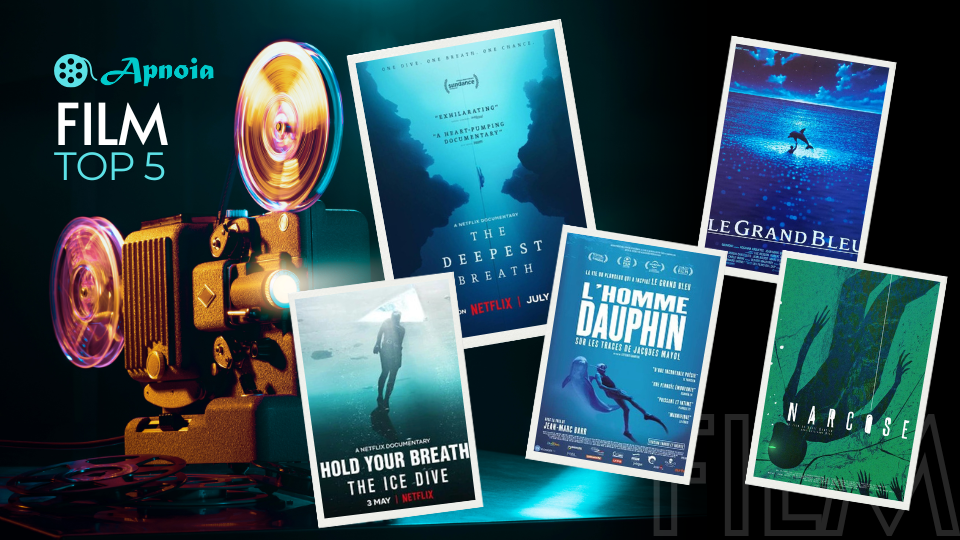
Ces films m’ont tous marqué à leur manière, mais Le Grand Bleu reste pour moi une référence intemporelle. C’est le film qui m’a vraiment donné envie de m’intéresser à l’apnée, à la fois pour son aspect sportif et son approche profondément spirituelle. Le documentaire sur Jacques Mayol, L’homme dauphin, est un hommage à cet apnéiste français qui a révolutionné ce sport par sa vision globale, mêlant dépassement de soi et connexion à la nature. De son côté, Julie Gautier apporte un regard unique et artistique sur l’apnée ; chacun de ses films est un petit bijou d’émotion, et son court-métrage Narcose explore avec une poésie fascinante les aspects méconnus de cette discipline. Le documentaire sur Johanna Nordblad, En Apnée : Traversée sous la Glace, illustre l’audace d’un défi extrême et un parcours hors du commun. J’espère qu’un jour son histoire sera portée à l’écran dans un film de fiction. Enfin, Au plus profond permet à ceux qui ne la connaissent pas encore, Alessia Zecchini, une apnéiste d’exception, dont le courage et la passion pour ce sport sont aussi inspirants que bouleversants.
Ces films, malgré leurs approches variées, ont tous en commun de capturer la beauté et la complexité de l’apnée, un sport exigeant qui unit les êtres humains à travers des émotions intenses et durables.
My point of view
These films have all impacted me in their own way, but The Big Blue remains an eternal reference for me. It’s the movie that truly made me want to explore freediving, both for its athletic aspect and its deeply spiritual approach. The documentary about Jacques Mayol, The Dolphin Man, is a tribute to the French freediver who revolutionized this sport with his holistic vision, blending self-transcendence and a deep connection with nature. Julie Gautier, on the other hand, offers a unique and artistic perspective on freediving; each of her films is a little gem of emotion, and her short film Narcose fascinatingly delves into the lesser-known aspects of this discipline with poetic depth. The documentary about Johanna Nordblad, Hold Your Breath: The Ice Dive, showcases the boldness of an extreme challenge and an extraordinary journey. I hope her story will one day be brought to the big screen in a fiction film. Finally, The Deepest Breath introduces Alessia Zecchini to those who may not yet know her—an exceptional freediver whose courage and passion for this sport are as inspiring as they are moving.
Despite their varied approaches, these films all share the ability to capture the beauty and complexity of freediving, a demanding sport that unites people through powerful and lasting emotions.
 Apnoïa, l'apnée au féminin