
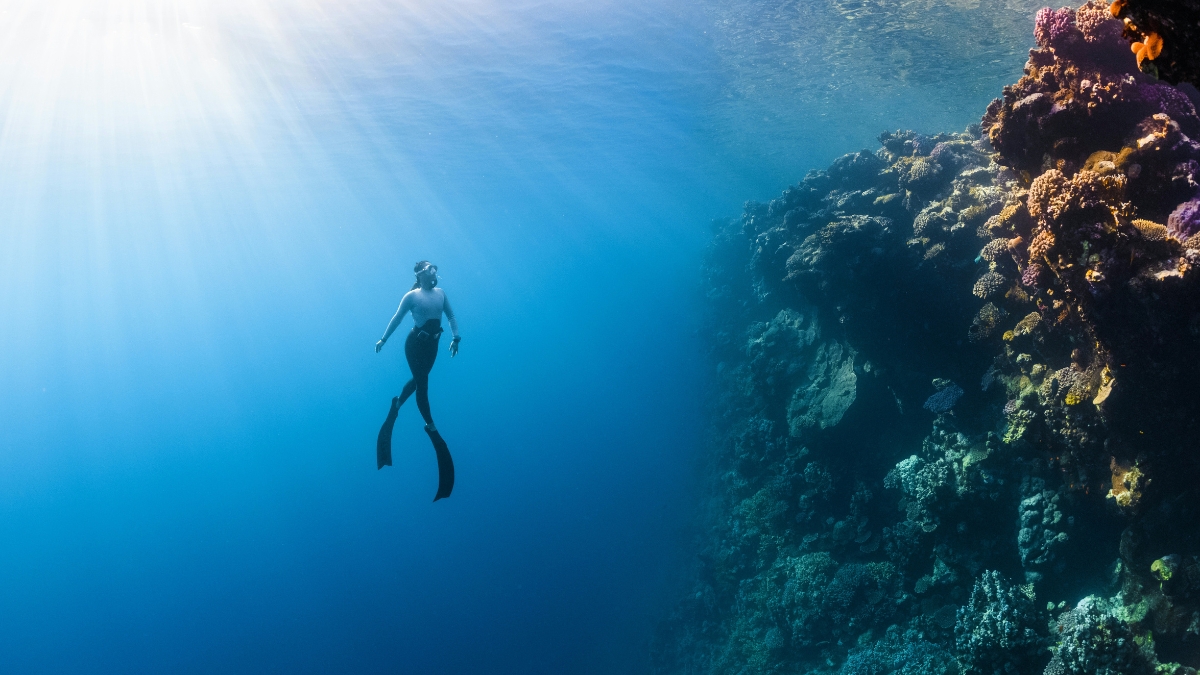
Pour beaucoup de femmes, l’eau est un lieu où le monde se tait. Un lieu sans jugement et sans urgence. Sous la surface, elles trouvent un espace de calme et un cocon liquide où les pressions terrestres s’évanouissent. L’eau devient refuge, alliée, miroir d’un corps qui n’a plus besoin de se justifier. Plonger, pour elles, ce n’est pas fuir le monde : c’est se retrouver.
Un espace sans contrainte
Sur terre, on apprend aux femmes à se tenir droites, à sourire, à se maîtriser et surtout à ne pas prendre trop de place. Dans l’eau, tout cela disparaît. La gravité s’efface, et avec elle la contrainte. L’apnée offre un terrain de liberté totale : ici, le corps n’est plus observé, comparé, jugé. Il devient mouvement, sensation et instinct.
Alice Modolo évoque, après son record de -100 m, dans son interview pour RMC Sport (2021) : « un retour à une vérité intérieure » et « la sensation d’être enfin soi-même sous l’eau ». Dans le documentaire « La voie bleue » (France 3, 2022), elle décrit aussi l’apnée comme « une expérience d’authenticité totale, loin des attentes du monde extérieur ».
Cette vérité du geste, libérée de toute attente, redonne à la féminité sa nature profonde : un équilibre entre puissance et douceur.
Julie Gautier, apnéiste, danseuse et réalisatrice, dont les films poétiques célèbrent la grâce des corps immergés, précise dans son interview pour Konbini (2018) : « Sous l’eau, tout devient calme. On découvre que la force n’est pas forcément violente. »
Sous l’eau, le corps cesse d’être un projet à corriger : il devient un être à écouter.
La liberté intérieure
La liberté que procure l’apnée dépasse le corps. Elle naît du souffle, de la lenteur, de la confiance. Sous la surface, chaque seconde compte, mais aucune ne pèse. Le temps se dilate. Le mental se vide. Il ne reste qu’un instant pur, sans attente ni performance.
Hanako Hirose, championne du monde japonaise, confie dans un entretien avec AIDA International (2019) : « Là-bas, il n’y a que la paix. Vous n’êtes pas observé, vous êtes simplement vous-même. » (Down there, it’s only peace. You are not being watched, you are just being.)
Pour beaucoup de femmes, cette expérience devient un acte d’émancipation silencieuse : une manière de s’appartenir à nouveau. Apprendre à retenir son souffle, c’est apprendre à écouter la vie différemment, sans panique, sans contrôle, dans la confiance.
Un bleu qui guérit
Certaines disent que l’eau les a sauvées.
Julie Gautier parle d’un lien mystique avec l’eau comme d’un retour à une mémoire ancienne, presque maternelle. Dans le documentaire One Breath Around the World (2019) et Ama (2018), Julie évoque souvent le lien maternel et archaïque avec l’eau : « Plonger, c’est retourner à la source, au ventre de la Terre. »
De son côté, Alenka Artnik, recordwoman slovène, évoque la réconciliation qu’elle a trouvée sous l’eau après des années de souffrance. Dans son interview pour The Guardian (2021), elle raconte comment la plongée l’a aidée à surmonter la dépression : « L’apnée m’a redonné goût à la vie. Le calme que j’ai trouvé sous l’eau n’est pas l’absence de douleur, c’est apprendre à avoir confiance en mon retour. » (Freediving gave me my life back. The calm I found underwater isn’t the absence of pain — it’s learning to trust that you’ll come back.)
Sous l’eau, les cicatrices deviennent légères. Le silence soigne. Le bleu n’est plus seulement un espace : il devient un état d’être.
La Finlandaise Johanna Nordblad, connue pour ses plongées sous la glace et son documentaire En Apnée : traversée sous la glace (Netflix, 2022), parle elle aussi de ce pouvoir apaisant : « Sous la glace, il n’y a plus de peur. Il n’y a que le silence et la beauté. L’eau me rend calme, comme si tout redevenait possible. » (Under the ice, there is no fear. There is only silence and beauty. The water makes me calm, as if everything becomes possible again.)
Pour de nombreuses femmes, l’apnée est plus qu’un sport : c’est une forme de retour à soi. Dans ce monde fluide et sans gravité, elles trouvent un refuge, un apaisement, une liberté nouvelle, celle d’exister pleinement, sans contrainte, sans masque, et sans peur.
Et pour vous, qu’est-ce que cela évoque ?
Dis-moi tout en commentaire.
For English readers,
The call of the blue: why so many freediving women find freedom in water?
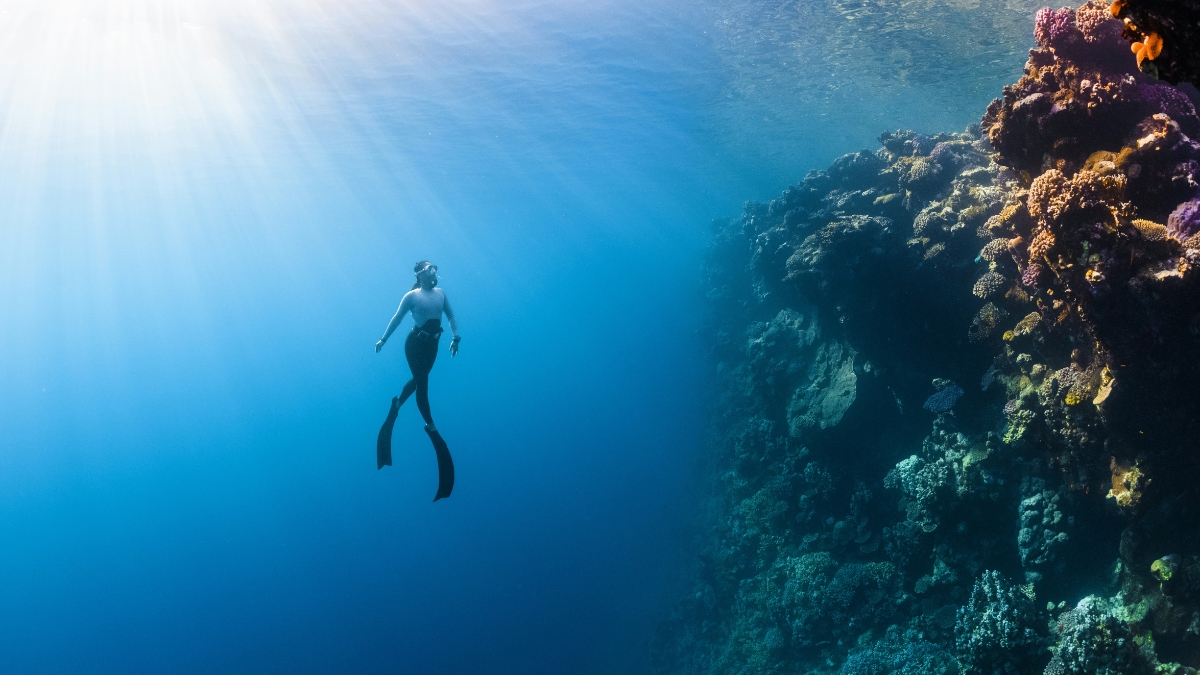
For many women, water is a place where the world falls silent, a place without judgment, without urgency. Beneath the surface, they find calm, a liquid cocoon where the pressures of the earth dissolve. The water becomes refuge, ally, mirror of a body that no longer needs to justify itself. For them, diving is not escaping the world, it’s coming back to themselves.
A Space Without Constraint
On Earth, women are taught to stand tall, to smile, to stay composed, and, above all, not to take up too much space. In the water, all of that disappears. Gravity fades, and with it, constraint. Freediving offers a realm of total freedom: here, the body is no longer observed, compared, or judged. It becomes movement, sensation, instinct.
After her 100-meter record, Alice Modolo said in her interview with RMC Sport (2021) that freediving was “a return to an inner truth” and “the feeling of finally being herself underwater.”
In the documentary La voie bleue (France 3, 2022), she also described it as “an experience of absolute authenticity, far from the expectations of the outside world.”
This truth of movement, freed from all expectation, restores femininity to its deepest essence: a balance between strength and softness.
Julie Gautier, freediver, dancer, and filmmaker whose poetic films celebrate the grace of the submerged body, explained in her Konbini interview (2018): “Underwater, everything becomes calm. You realize that strength doesn’t have to be violent.”
Beneath the surface, the body stops being a project to fix, it becomes something to listen to.
Inner Freedom
The freedom that freediving brings goes far beyond the body. It’s born from breath, from slowness, from trust. Below the surface, every second matters, yet none of them feel heavy. Time stretches. The mind empties. There remains only a pure instant, without expectation, without performance.
World Champion Hanako Hirose said in an interview with AIDA International (2019): “Down there, it’s only peace. You are not being watched, you are just being.”
For many women, this experience becomes a silent act of emancipation, a way of belonging to themselves again. Learning to hold one’s breath is learning to listen to life differently: without panic, without control, in trust.
The Blue That Heals
Some say that the water saved them.
Julie Gautier often speaks of a mystical connection with water, a return to an ancient, almost maternal memory. In her films One Breath Around the World (2019) and Ama (2018), she evokes this elemental bond: “To dive is to return to the source, to the womb of the Earth.”
Alenka Artnik, the Slovenian world record-holder, speaks of the reconciliation she found underwater after years of pain. In her interview with The Guardian (2021), she shared: “Freediving gave me my life back. The calm I found underwater isn’t the absence of pain — it’s learning to trust that you’ll come back.”
Finnish freediver Johanna Nordblad, known for her dives beneath the ice and her Netflix documentary Hold Your Breath: The Ice Dive, also describes this power of peace: “Under the ice, there is no fear. There is only silence and beauty. The water makes me calm, as if everything becomes possible again.”
Underwater, scars grow lighter. Silence heals. The blue is no longer just a space, it becomes a state of being.
For many women, freediving is more than a sport, it’s a return to self. In this fluid, weightless world, they find refuge, serenity, and a new kind of freedom, the freedom to exist fully, without constraint, without mask, and without fear.
And what does this evoke for you?
Tell me all about it in the comments.
 Apnoïa, l'apnée au féminin